Red Wiggler
Definition
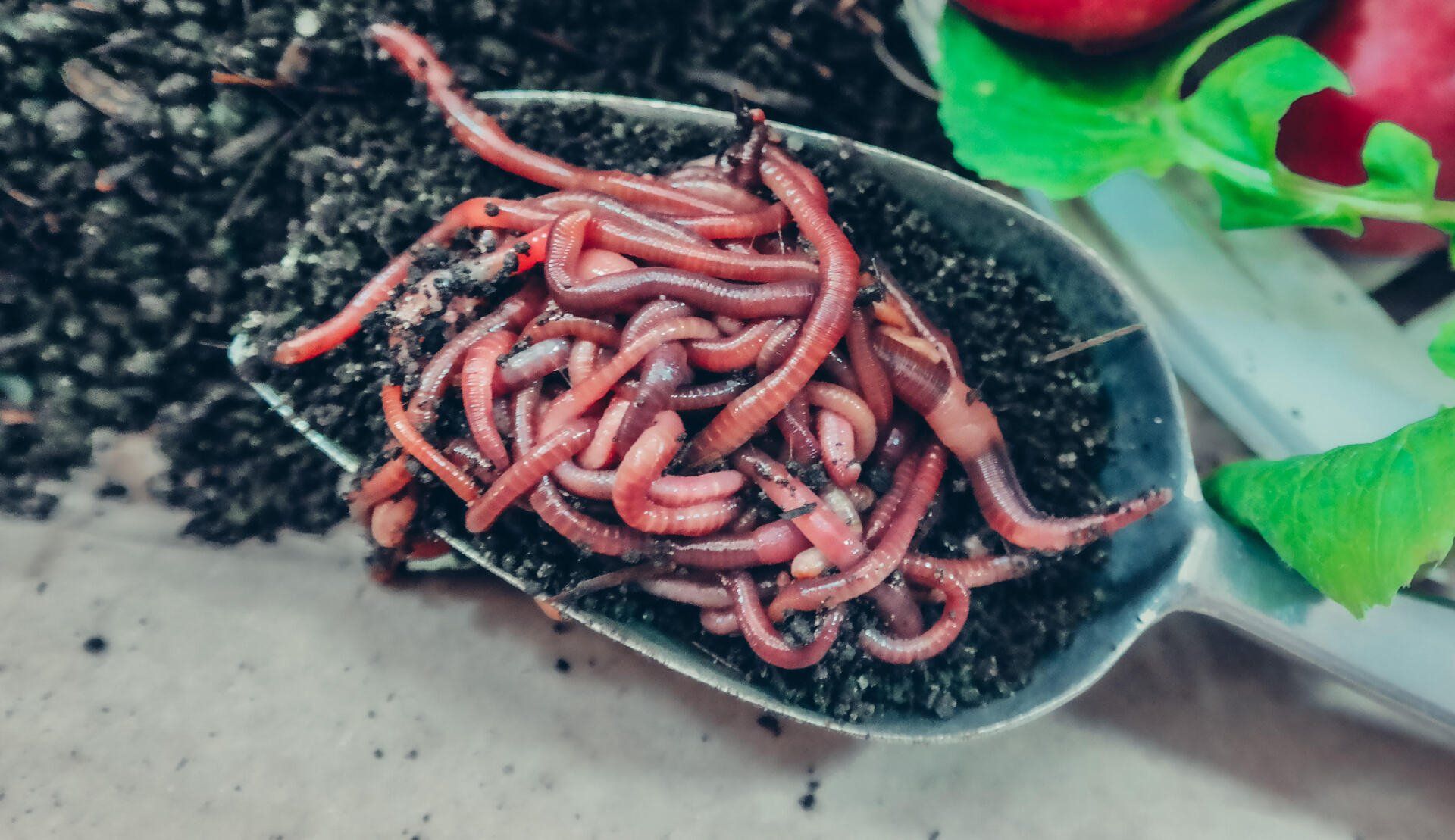
Red Wiggler is the common name for Eisenia fetida, the worm species used almost universally in commercial vermicomposting because of how efficiently it consumes organic matter and how well it tolerates the crowded, high-turnover conditions of a worm bin — conditions that would stress or kill many other earthworm species. It's also known as the red worm, brandling worm, or tiger worm.

Sources: NC State Extension (Sherman), UConn Extension, Ohio State Soil Ecology Lab (Edwards & Arancon), Cornell Cooperative Extension, Oregon State University Extension, BioMed Research International (2013), IntechOpen (2018)
Why It Matters
Not every earthworm species is suited to composting. Most native earthworms prefer stable soil environments and reproduce slowly, making them poor candidates for the intensive, high-density conditions of commercial worm farming. Red Wigglers evolved to thrive in decaying organic surface litter, which happens to be exactly the environment a worm bin recreates.
How It Works
Red Wigglers live and feed near the surface of decomposing material rather than burrowing deep the way common garden earthworms do. Mature worms lay about 2–3 cocoons a week, each usually holding 2–3 hatchlings that reach sexual maturity in about 6–11 weeks — processing organic matter into castings far faster than passive microbial decomposition alone could manage.
Benefits
- Fast processing of organic waste into castings
- Tolerates a wide temperature range and crowded bin conditions
- Reproduces quickly, supporting long-term worm bin success
- Produces premium, biologically active castings
- Doubles as excellent live fishing bait
Sources: Ohio State Soil Ecology Lab (Edwards & Arancon), Oklahoma State University Extension
Introducing & Caring for New Red Wigglers
Unlike a soil amendment, Red Wigglers are living animals with real settling-in needs. Rushing feeding or conditions in the first few weeks is the most common cause of a struggling new bin.
First Introduction
Add worms to pre-moistened bedding and let them settle before feeding heavily. A new bin needs about 2–3 weeks for the population to establish before it can handle full feeding.
Recovery Period
Start with a small, light feeding (about ½ cup for 1 lb of worms in a 10-gallon bin) rather than a full load — overfeeding a new bin is the most common first-week mistake.
Feeding
Once established, red wigglers typically eat about a quarter to half their body weight a day, and more under ideal, managed conditions. Start lower, increase gradually, and add food only when the last feeding is mostly gone. Food should generally disappear within 48–72 hours.
Bedding & Moisture
Keep bedding damp like a wrung-out sponge — about 80% moisture. Too dry and worms go dormant; too wet and the bin turns anaerobic.
Sources: UC Santa Barbara Worm Program, Oregon State University Extension, UF/IFAS Extension
Red Wiggler vs. European Nightcrawler vs. Common Garden Earthworm
All three are earthworms, but they behave very differently — and only some of them belong in a compost bin at all.
| Red Wiggler | European Nightcrawler | Common Garden Earthworm | |
|---|---|---|---|
| Habitat & behavior | Surface-dwelling (epigeic) — lives in decaying organic litter, not soil | Burrows deeper than Red Wigglers, actively improves soil structure | Deep soil-dweller — naturally avoids concentrated organic matter |
| Processing speed | Fast — smaller size means a higher metabolic rate | Slower per worm, but larger and processes material at multiple depths | Not compost-adapted — won't reproduce or thrive in a bin |
| Crowding tolerance | High — built for dense, high-turnover bin conditions | Lower — needs more space per worm, larger bins (12–18 in. minimum) | Very low — will try to leave or die in a confined bin |
| Temperature tolerance | Best at about 60–80°F, avoid above 85°F | Best at about 59–77°F, tolerates roughly 37–91°F | Depends on native soil conditions, not bin-adapted |
| Best for | Composting bins, apartment/indoor setups, fast kitchen scrap turnover | Garden soil aeration, larger outdoor systems, fishing bait | Healthy native soil ecosystems — not suited to composting |
Sources: Ohio State Soil Ecology Lab (Edwards & Arancon), BioMed Research International (2013)
Common Mistakes to Avoid
Red Wigglers are forgiving and easy to care for, but a few habits still cause real problems.
Sources: Cornell Cooperative Extension, UC Santa Barbara Worm Program
Frequently Asked Questions
What is a Red Wiggler? +
How are Red Wigglers different from regular earthworms? +
Can I release Red Wigglers directly into garden soil? +
How much should I feed new Red Wigglers? +
What temperature do Red Wigglers need? +
Do Red Wigglers try to escape their bin? +
Can Red Wigglers be used as fishing bait? +
How does Red Wiggler relate to composting worms and worm cocoons? +
Red Wigglers are living workers in the Fed 'n Happy soil biology system. Banding identifies a red wiggler; the swollen band (clitellum) shows it's mature. An ammonia smell means too much food or nitrogen. Stop feeding and add dry bedding.