Composting Worms
Definition
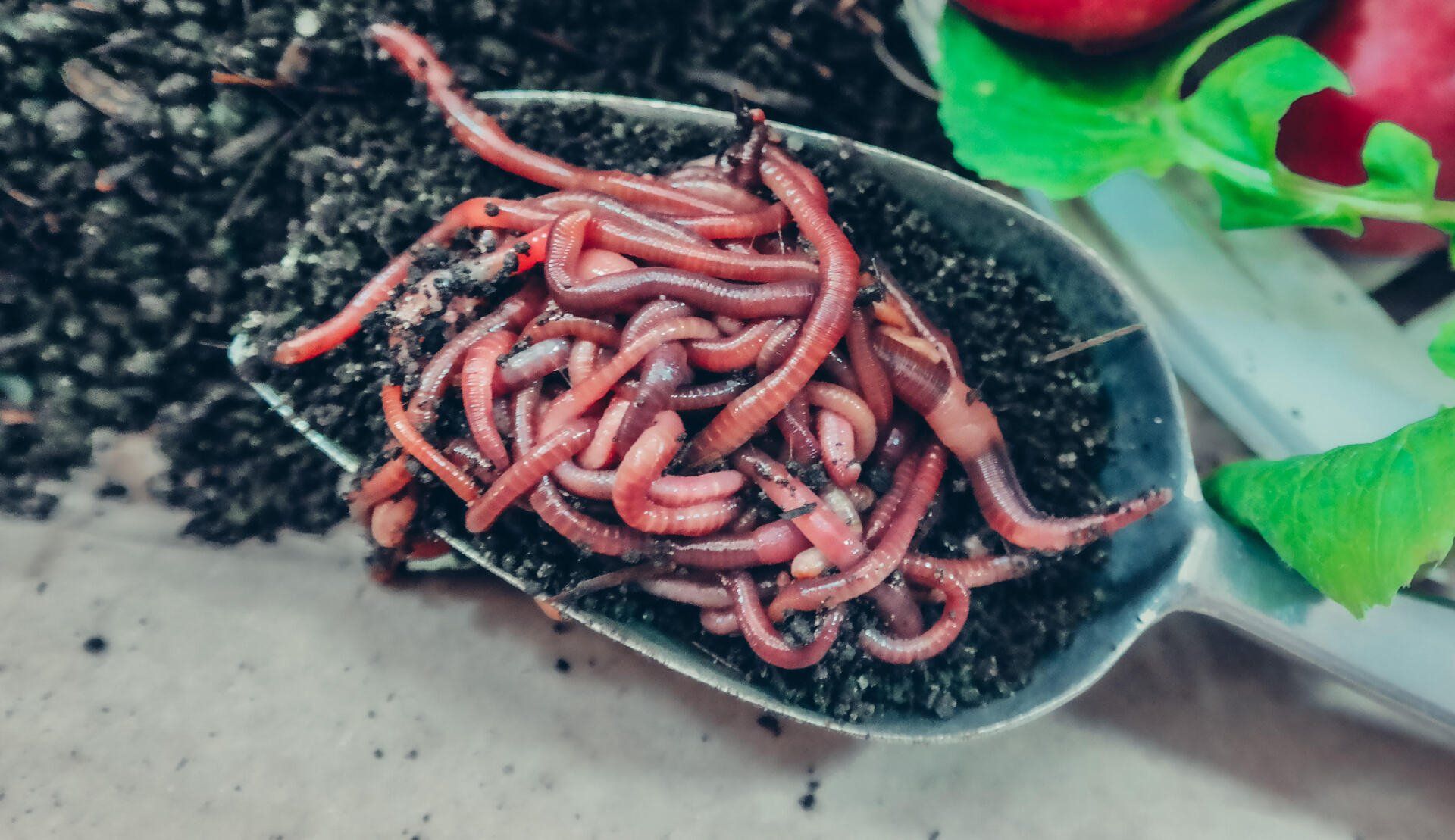
Composting worms are worm species specifically adapted to consuming decomposing organic matter near the soil surface, distinct from common garden earthworms that prefer to burrow deep into stable, undisturbed soil rather than living in shifting piles of decaying material.

Sources: NC State Extension (Sherman), Raising Earthworms Successfully, FAO Feedipedia – Earthworms, Edwards & Arancon, Ohio State Univ. Soil Ecology Lab (hosted by SLU)
Why It Matters
Not every earthworm can handle the conditions of a compost pile or worm bin, dense, actively decomposing material with fluctuating moisture and temperature. Composting worms evolved for exactly this kind of environment, which is why species like the Red Wiggler dominate commercial vermicomposting rather than ordinary garden earthworms.
How It Works
Composting worms live and feed right at the surface of decaying organic material, consuming it along with the bacteria and fungi already breaking it down, then excreting nutrient-rich castings, processing far more organic matter per pound of body weight than deep-burrowing earthworm species typically do.
Benefits
- Fast decomposition of organic waste
- Produces premium, nutrient-dense castings
- Supports active soil biology
- An effective form of household or farm waste recycling
Sources: U.S. EPA – Approaches to Composting, Oregon State University Extension (EM 9034)
Choosing a Composting Worm Species
Species selection mostly comes down to climate, patience, and how much processing speed matters to you.
Cold-Tolerant & Forgiving
Red Wigglers handle a wide temperature range and crowded bin conditions, making them the standard choice for most home setups.
Fishing Bait Dual-Purpose
European Nightcrawlers double as composters and popular fishing bait, and tend to burrow slightly deeper than Red Wigglers.
Warm-Climate Powerhouse
African Nightcrawlers are large, voracious eaters, but need consistently warm temperatures and are less forgiving of cold snaps.
Fast but Escape-Prone
Indian Blues process waste quickly in warm conditions but are notorious "escape artists" and highly cold-sensitive.
Sources: Edwards & Arancon, Ohio State Univ. Soil Ecology Lab (hosted by SLU), Soil Biology & Biochemistry (Reinecke et al., 1992), NIES record, NC State Extension (Sherman), Raising Earthworms Successfully
Red Wiggler vs. European Nightcrawler vs. African Nightcrawler vs. Indian Blue
All four are true composting worms — the differences come down to climate tolerance, size, and temperament.
| Red Wiggler | European Nightcrawler | African Nightcrawler | Indian Blue | |
|---|---|---|---|---|
| Temperature tolerance | Wide — roughly 60–80°F ideal | Lower temperature optimum, less tolerant of extremes | Narrow — needs consistent warmth | Very narrow — dies below ~50°F |
| Size | Small to medium | Larger than Red Wigglers | Large — among the biggest composters | Small, slender |
| Processing speed | Fast | Slightly slower, larger castings | Fast, high volume per worm | Very fast in warm conditions |
| Temperament | Tolerates crowding well | Calm, dual-purpose as fishing bait | Needs more space per worm | Prone to escaping the bin |
| Best for | Most home setups, beginners | Gardeners who also fish, cooler climates | Warm climates, high-volume operations | Experienced growers in consistently warm settings |
Sources: Oregon State University Extension (EM 9034), Edwards & Arancon, Ohio State Univ. Soil Ecology Lab (hosted by SLU), FAO Feedipedia – Earthworms
Common Mistakes to Avoid
Most problems with composting worms come down to species-environment mismatch, not the worms themselves.
Sources: Oregon State University Extension (EM 9034), NC State Extension (Sherman), Raising Earthworms Successfully, Edwards & Arancon, Ohio State Univ. Soil Ecology Lab (hosted by SLU)
Frequently Asked Questions
What are composting worms? +
What species count as composting worms? +
Can I use regular garden earthworms instead? +
Should I mix different composting worm species together? +
Which composting worm species is best for beginners? +
Why do some composting worms process waste faster than others? +
Do composting worms reproduce faster than garden earthworms? +
How does Red Wiggler relate to composting worms generally? +
Healthy worms are partners in creating living soil amendments — matching the right species to your climate and setup is what lets that partnership actually work.